Research
Interface Tissue Engineering and the Formation of Complex Tissue Systems
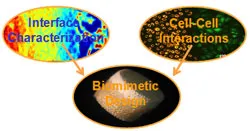
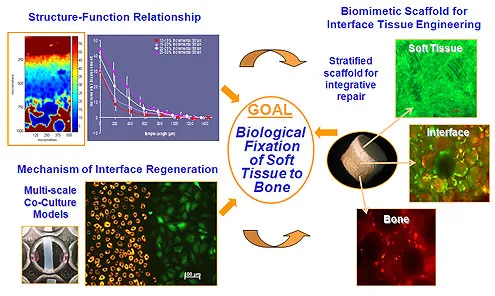
Our Research Program centers on understanding how the biological interface between different types of connective tissues are formed and maintained in the body, and more importantly, how to re-establish these distinct tissue-to-tissue boundaries post injury. Our approach is to regenerate the native tissue-to-tissue interface on biological and synthetic grafts, with the extended goal of engineering complex tissues or organ systems pre-designed to integrate with the host environment. The working hypothesis is that heterotypic cellular communications play a significant role in the regeneration and homeostasis of distinct skeletal tissue boundaries. Specifically, our approach to interface tissue engineering include three closely related areas:
- Characterize the structure-function relationship at the soft tissue-to-bone interface
- Elucidate the mechanism for interface regeneration and homeostasis, focusing on the role of heterotypic cellular interactions
- Design biomimetic, stratified scaffold systems able to control cellular interactions and promote the formation of complex tissues
Understanding tissue-to-tissue integration is also essential for connecting together different tissue engineered orthopaedic grafts, as biological fixation will be critical in facilitating the translation of these tissue engineered technologies to the clinic. Currently, we are conducting research on several interface tissue engineering areas.
Novel Biomaterials Design and Cell-Biomaterial Interactions
- Composite Biomaterials for Orthopaedic Tissue Engineering
- Dental Biomatarials and Tissue Engineering
Research areas
Orthopaedic Interface Tissue Engineering
Soft tissue-to-bone interface are ubiquitous in the body, and they are critical for joint motion and stabilization. Following the approach outlined below for interface tissue engineering, current reearch projects focus on the junction between soft tissue (e.g. tendon, ligament, cartilage) and bone due to its functional significance in musculoskeletal motion.
Project 1: Ligament-to-Bone Interface Tissue Engineering: Anterior Cruciate Ligament (ACL) Grafts
Collaborators
Drs. S.P. Doty, S.A. Rodeo, A. Boskey and N. Camacho, Hospital for Special Surgery
Drs. E.E. Konofagou, X.E. Guo and C.T. Hung, Biomedical Engineering, Columbia University
Dr. F.H. Chen, National Institute of Health (NIH)
Project 2: Tendon-to-Bone Interface Tissue Engineering: Rotator Cuff Tendon Repair
Collaborator
Dr. W.N. Levine, Orthopaedic Surgery, Columbia University
Project 3: Cartilage-to-Bone Interface Tissue Engineering: Osteochondral Graft-Based Cartilage Repair
Collaborators
Drs. C.T. Hung, G.A. Ateshian, and V.C. Mow, Columbia University
Dr. F.H. Chen, National Institute of Health (NIAMS)
Polymer-Ceramic Composites for Orthopaedic Tissue Engineering
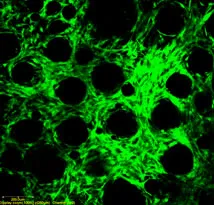
We are also pursuing the development of polymer-ceramic/bioactive glass composites and the design of three-dimensional scaffold based on these novel composite materials. Specifically, we seek to balance changes in scaffold mechanical properties with biodegradability and desired bioactivity, in addition to elucidating the mechanism behind the bioactivity or osteo-integration potential of these composites. Current studies focus on evaluating the effects of scaffold fabrication and culturing parameters on the phenotype and genotype of stem cells and differentiated connective tissue cells cultured on the composite scaffolds in vitro and in vivo.
Related Publications
Lu HH, Scott K, El-Amin SF and Laurencin CT; “Three-dimensional, bioactive, biodegradable polymer-bioactive glass composite scaffolds with improved mechanical properties support collagen synthesis and mineralization by human osteoblast-like cells in vitro”, Journal of Biomedical Materials Research, 64A:465-474,2003.
Lu HH, Cooper JA, Manuel S, Freeman JW, Attawia M.A., Ko FK and Laurencin CT; “Anterior cruciate ligament regeneration using braided biodegradable scaffolds: in vitro optimization studies”, Biomaterials, 26(23):4805-4816, 2005.
Lu HH, Tang A, Oh S, Spalazzi JP and Dionisio K; “Compositional effects on the formation of a calcium phosphate layer and the response osteoblast-like cells on polymer-bioactive glass composites”, Biomaterials, 26(32):6323-6334, 2005.
Wan LQ, Jiang J, Arnold DE, Hurst WJ, Guo XE, Lu HH and Mow VC, “Calcium concentration effects on the mechanical and biochemical properties of chondrocyte-alginate constructs”, Cellular and Molecular Bioengineering, 1(1):93-102, 2008.
Dental Biomaterials and Tissue Engineering
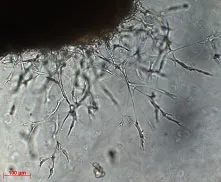
We are interested in designing cell-instructive biomaterials and tissue engineered scaffolds for dental and craniofacial applications. Specifically, we have focused on the development of a multi-factor delivery system for bone regeneration with applications in craniofacial reconstruction. In addition, work are underway to develop tissue engineering scaffolds for promoting the regeneration of the dental pulp tissue and enable long term dental self repair.
Project 1: Dental Pulp Tissue Engineering
Collaborators
Drs. G. Hasselgren and R. Landesberg, College of Dental Medicine, Columbia University
Dr. Dror Seliktar, Biomedical Engineering, Technion Israel Institute of Technology
Project 2: Controlled delivery of Platelet-Rich Plasma (PRP)-derived Growth Factors
Collaborators
Drs. R. Landesberg and S. Eisig, College of Dental Medicine, Columbia University
Related Publications
Tsay RC, Vo J, Burke A, Eisig SB, Lu HH and Landesberg R; “Differential growth factor retention by platelet-rich plasma composites”, Journal of Oral and Maxillofacial Surgery, 63:521-528, 2005.
Landesberg R, Burke A, Pinsky D, Katz R, Vo J, Eisig SB and Lu HH; “Activation of platelet rich plasma using thrombin receptor agonist peptide”, Journal of Oral and Maxillofacial Surgery, 63:529-535, 2005.
Lu HH, Vo JM, Lin J, Shin S, Cozin M, Tsay R and Landesberg R; “Controlled delivery of growth factors derived from platelet-rich plasma for bone formation”, Journal of Biomedical Materials Research A, 86A(4):1128-1136, 2008.